


















Modi's “Operation Sindoor”: A New Era in India’s Anti-Terror Policy

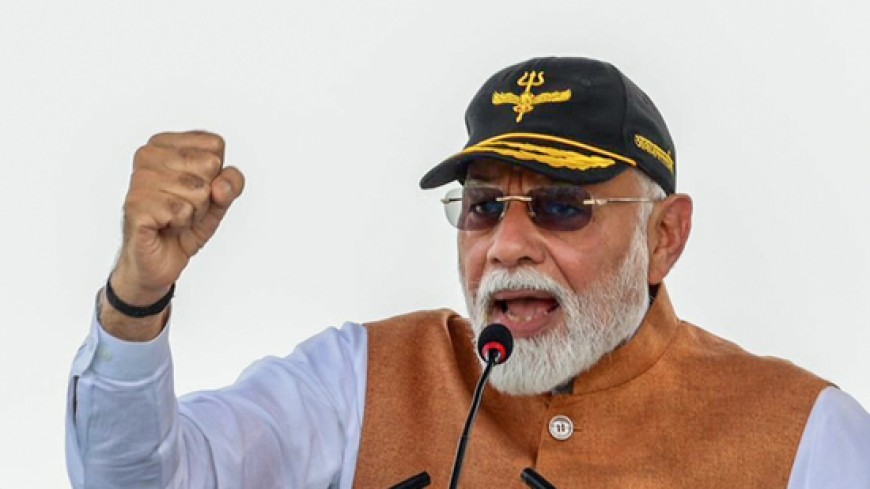
Prime Minister Narendra Modi addressed the nation on May 12, 2025, at 8:00 PM, delivering a significant speech that outlined India’s new approach to counter-terrorism following the recent military operation against terrorist infrastructure in Pakistan. The 30-minute address firmly established what Modi called a “new normal” in India's strategy against cross-border terrorism, marking a substantial shift in national security policy with far-reaching implications for regional stability.
The Prime Minister’s address came two days after a ceasefire agreement between India and Pakistan following three days of military exchanges, and five days after India launched “Operation Sindoor” in response to the deadly terrorist attack in Pahalgam.
Context Behind the Address
Pahalgam Atrocity Recap
On April 22, 2025, terrorists attacked tourists in Pahalgam, Kashmir, killing 26 civilians, including a Nepali citizen. According to official reports, the attackers targeted Hindu visitors after verifying their religious identities. Many victims were shot in front of their families, according to eyewitness accounts.

Indian intelligence agencies subsequently linked the attack to terror networks operating from Pakistani territory. The Ministry of External Affairs issued a formal statement on April 23 alleging that elements within Pakistan continued to provide support and sanctuary to terrorist groups targeting India, a charge Pakistan denied.
Operation Sindoor Unveiled
In response to the Pahalgam attack, India launched “Operation Sindoor” on May 7, 2025. The Indian military conducted strikes against nine locations identified as terrorist infrastructure sites in Pakistan and Pakistan-administered Kashmir. According to defense ministry statements, the 23-minute operation employed Rafale aircraft, SCALP missiles, and AASM Hammer guided bombs to target camps associated with groups including Jaish-e-Mohammed and Lashkar-e-Taiba.
Defense analysts noted that the operation represented a coordinated effort involving air power, precision munitions, and intelligence capabilities. According to official statements, the military action specifically targeted terrorist training camps and launch pads, avoiding Pakistan military installations.
The operation triggered three days of military exchanges between the nuclear-armed neighbours, with both countries using missiles and drones against various targets before agreeing to a ceasefire on May 10, after talks facilitated by Washington and several global powers.
Key Highlights of the Speech
New Normal for Retaliation
In his address, Prime Minister Modi stated: “If there is a terrorist attack on India, a fitting reply will be given... on our terms.” He characterised Operation Sindoor as establishing a “new normal” in India’s approach to terrorism, indicating that India would no longer be constrained by conventional response limitations when addressing terrorist threats.
Modi stated that Operation Sindoor goes beyond being a mere military response, explaining that it embodies both national sentiment and a firm commitment to ensuring justice.
The Prime Minister also clarified that the operation had only been "kept in abeyance" rather than terminated, suggesting India's readiness to resume military action if Pakistan fails to act against terrorist organizations operating from its territory.
No Tolerance for Nuclear Blackmail
A central element of Modi's speech was his direct rejection of what he termed Pakistan's "nuclear blackmail." The Prime Minister stated: "India will strike precisely and decisively at the terrorist hideouts developing under the cover of nuclear blackmail."
This statement addresses the long-standing concern that Pakistan's nuclear capabilities have constrained India's options for responding to terrorist provocations. Defense experts interviewed after the speech indicated that Modi's declaration suggests India has developed both the capability and political will to conduct limited military operations without triggering nuclear escalation.
The statement also appears intended to signal to the international community that India will no longer allow nuclear deterrence to inhibit its counter-terrorism efforts.
Terror-First Dialogue
When discussing potential future talks, Modi clearly said:
“Terror and talks cannot go together; terror and trade cannot go together.”
The Prime Minister outlined specific prerequisites for normalisation of relations, including complete dismantling of terrorist infrastructure, accountability for attack perpetrators, and cessation of support to militant groups. Government sources have previously indicated that discussions regarding Pakistan-occupied Kashmir would also be necessary for substantive dialogue.
“In the coming days, we will measure every step of Pakistan... what kind of attitude Pakistan will adopt,” Modi stated, indicating that concrete actions rather than verbal assurances would determine diplomatic developments. This conditions-based approach places responsibility on Pakistan to demonstrate tangible changes before diplomatic relations can improve.
Strategic and Military Implications

Following Modi's speech, the Ministry of Defence announced heightened alert status across all three military branches. Defense Minister Rajnath Singh confirmed in a press briefing on May 13 that border forces have been reinforced along the Line of Control and international border with Pakistan.
The Indian Army has canceled previously scheduled leave for personnel in forward areas, according to military sources speaking on condition of anonymity. Joint exercises between army and air force units, originally scheduled for August, have reportedly been moved forward to late May as part of increased operational readiness.
Defense budget allocations for counter-terrorism operations and border security have been increased by 15%, according to a statement from the Finance Ministry. The additional funds will support enhanced surveillance capabilities and rapid response units along sensitive border areas.
Technological Edge
Operation Sindoor demonstrated significant technological advancements in India's military capabilities. Defense analysts noted that the operation employed a sophisticated mix of drones, precision-guided missiles, and real-time intelligence systems that represent substantial improvements since previous cross-border operations.

We successfully identified, monitored, and neutralised targets by combining proven military assets with next generation domestic technology,” explained Air Marshal A.K. Bharti, Director General of Air Operations. “The coordination was enhanced by our network-centric defense infrastructure, which provided comprehensive situational awareness across all operational environments.
The Defense Research and Development Organisation (DRDO) confirmed that several recently developed systems saw their first operational deployment during the mission, though specific details remain classified for security reasons.
Deterrence vs. Escalation
Military strategists have highlighted the delicate balance Modi's new doctrine attempts to achieve between establishing credible deterrence and avoiding uncontrolled escalation. The carefully calibrated nature of Operation Sindoor, targeting terrorist infrastructure while avoiding Pakistani military installations, reflects this approach.
“The challenge for India’s military planners is to create sufficient deterrence against terrorist activities without triggering a broader conflict between nuclear powers,” said Dr. Happymon Jacob, Professor of International Relations at Jawaharlal Nehru University.
Defense Ministry officials have acknowledged developing specific protocols for graduated response options that can be tailored to different provocation levels, according to sources familiar with the matter. These protocols reportedly include clear red lines and de-escalation pathways.
Diplomatic and Regional Fallout
India-Pakistan Relations
Diplomatic relations between India and Pakistan have deteriorated significantly following Operation Sindoor and Modi's subsequent speech. Pakistan recalled its High Commissioner from New Delhi on May 13, and India has similarly withdrawn its diplomatic representation from Islamabad, leaving only essential consular staff in both missions.
Trade between the two countries, already minimal following previous tensions, has been further restricted with India suspending the limited border trade that had continued at the Wagah-Attari border. The South Asian Association for Regional Cooperation (SAARC) summit scheduled for July 2025 in Kathmandu now appears unlikely to proceed with full participation.
Despite the public diplomatic freeze, security analysts suggest back-channel communications remain operational. Former Indian High Commissioner to Pakistan (1999-2000) G. Parthasarathy has advocated for a measured diplomatic approach, suggesting India maintain a “watchful distance” in its dealings with Pakistan. “We should preserve communication channels while allowing them space to address their internal challenges independently,” he advised, emphasising the importance of “tempering our public statements, exercising pragmatism, and remaining receptive to dialogue.”
International Community Response
International reaction to Modi's speech has been mixed. The United States called for “restraint and dialogue” while acknowledging India’s "right to defend itself against terrorist threats." In a statement, U.S. Secretary of State Marco Rubio urged both countries to "return to the negotiating table while addressing legitimate security concerns."
The United Kingdom expressed similar sentiments, with Prime Minister Keir Starmer emphasizing the need for "proportionate responses and de-escalation." The European Union has offered to mediate talks between the two countries.
The United Nations Secretary-General António Guterres called for “maximum military restraint,” stating that “the world cannot afford a military confrontation between India and Pakistan.” The UN Security Council is scheduled to discuss the situation on May 20.
Several countries, including France and Israel, have expressed stronger support for India's position, with French President Emmanuel Macron stating that “terrorism must be confronted decisively wherever it emerges.”
Role of Neighbours
China's response has been notably measured, with Beijing calling for "calm and restraint" while avoiding direct criticism of either India or Pakistan. Analysts suggest this reflects China's complicated position of maintaining strategic ties with Pakistan while pursuing improved economic relations with India.
Bangladesh and Sri Lanka have both expressed support for counter-terrorism efforts while calling for peaceful resolution, reflecting the complex regional dynamics at play. Nepal, which lost a citizen in the Pahalgam attack, has voiced stronger support for India's position.
Iran has offered to serve as a mediator between the two countries, leveraging its relationships with both nations. “Regional stability is in everyone's interest,” stated Iran's Foreign Minister during a press conference in Tehran.
Domestic Political Impact
Rallying National Sentiment
Public reaction within India has been predominantly supportive of Modi's approach. A snap poll conducted by India Today-Axis on May 13 indicated 78% approval for the government's handling of the situation, with 82% supporting the military operation specifically.
Media coverage across most major outlets has framed Operation Sindoor as a necessary and proportionate response to terrorism. Hashtags supporting the military action trended on social media platforms for several days following the operation.
Opposition parties have largely rallied behind the government's counter-terrorism stance, though with some nuanced differences. Congress leader Rahul Gandhi stated that while his party “stands firmly with our armed forces,” the government should ensure “diplomatic channels remain open to prevent escalation.”
Legal and Ethical Considerations
International Law and Sovereignty

Legal experts have debated the operation’s standing under international law. “Article 51 of the UN Charter recognises the inherent right of self-defense,” noted international law expert Aniruddha Rajput, member of the UN International Law Commission. “India’s position is that targeting terrorist infrastructure constitutes legitimate self-defense against non-state actors operating with state support.”
Pakistan has contested this interpretation, filing a formal complaint with the UN Security Council alleging violation of its sovereignty. The legal debate centers on the threshold for attributing terrorist actions to a state actor and the proportionality of response.
Human Rights Watchpoints
Human rights organisations have called for transparency regarding civilian impacts. Amnesty International urged both countries to “ensure protection of non-combatants in all military operations.” The International Committee of the Red Cross has requested access to affected areas to assess humanitarian needs.
Indian officials insist Operation Sindoor used precise strikes to avoid civilian harm, with a Defense Ministry representative claiming thorough intelligence checks were completed before each attack. Outside confirmation of these claims is difficult to obtain.
Potential Long-Term Outcomes
Shaping India's Defence Doctrine
Security analysts expect Operation Sindoor to be formalised in India's defense doctrine. “After launching ‘Operation Sindoor’ to end Pakistan's four-decade-long proxy war, India halts it three days later without achieving any clear objective” said Brahma Chellaney, strategic affairs expert at the Centre for Policy Research.
The doctrine’s evolution may include established thresholds for military response, integration of technological capabilities, and coordination mechanisms between intelligence and military branches. This represents a significant development from India’s traditionally reactive posture toward cross-border terrorism.
Precedent for Other Nations
Modi's approach may influence counter-terrorism strategies globally. The operation demonstrates a potential middle path between passive acceptance and full-scale war when responding to terrorism with state support. Several countries facing terrorist threats, particularly in the Middle East and Africa, have expressed interest in India's approach.
In Summary
Prime Minister Modi's May 12 address has fundamentally redefined India's counter-terrorism posture. By framing Operation Sindoor as both policy and symbol, Modi has signaled a strategic shift that extends beyond immediate military action to establish a new security paradigm.
The speech's significance lies in its explicit rejection of nuclear deterrence constraints and its establishment of clear conditions for diplomatic engagement. As regional dynamics adjust to this new reality, the long-term impact on security architecture, diplomatic relations, and terrorism itself remains to be seen.
What is clear is that Modi's “new normal” represents a watershed moment in India’s approach to national security. One that regional and global actors will be studying closely in the months and years ahead.
What's Your Reaction?