



















China’s Dangerous Shadow Over Arunachal Pradesh and Siachen

In May 2025, China unveiled its latest map, renaming villages in India’s Arunachal Pradesh for the fourth time. This time referring to the entire Indian State as: “Zangnan”, a name through which it asserts sovereignty over Arunachal Pradesh.
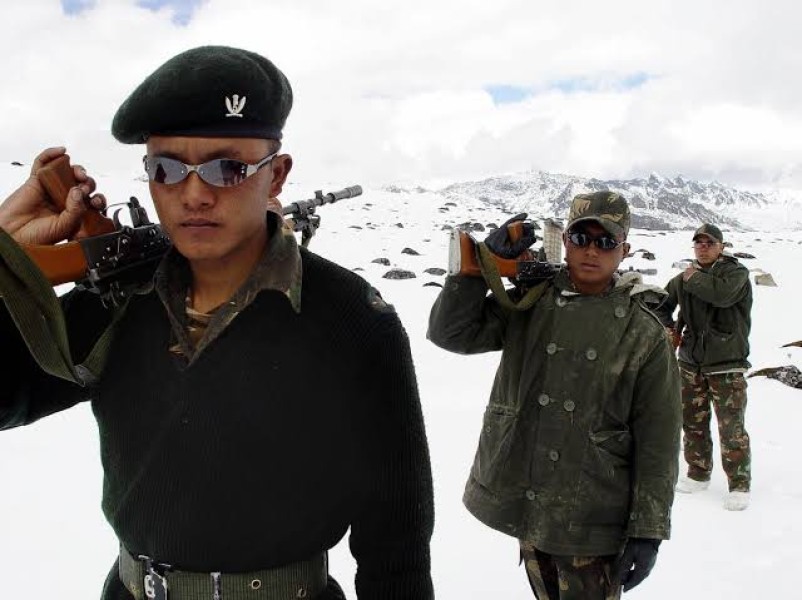
Half a world away, a Chinese road snakes through the Shaksgam Valley, halting just 48 kilometers from the Siachen Glacier, where Indian soldiers shiver in the world’s highest battlefield.
These moves are more than provocations; they’re pieces in China’s grand strategy to redraw India’s northern frontier, securing dominance over Asia’s rooftop and its vital resources.
With mountain passes, river headwaters, and the ambitions of three nuclear powers: India, China, and Pakistan - in play, the Himalayas are no longer a distant frontier but a global flashpoint. China's message is bold: this land, these heights, belong to us.
Arunachal Pradesh: The Eastern Fault Line

Roots of Conflict
China has been known to call Arunachal Pradesh “South Tibet,” (a claim rooted in its rejection of the 1914 Simla Accord’s McMahon Line, which India upholds as its border) has come up with yet another new name for it, and this time it’s: Zangnan.
The dispute dates back to colonial boundaries drawn when British India negotiated with Tibet, creating the McMahon Line that China never recognised. Beijing maintains that Tibet lacked authority to sign such agreements, rendering the border invalid. India, meanwhile, considers the 90,000 square kilometers of Arunachal Pradesh “non-negotiable” sovereign territory.
Decades of tension have simmered along this rugged divide, flaring into war in 1962 when Chinese forces briefly occupied portions of Arunachal Pradesh before withdrawing. The humiliating defeat remains seared in India’s strategic memory, informing its current military posture.
Recent Flashpoints
In 2023 and 2025, China renamed dozens of Arunachal Pradesh locations, a symbolic grab India branded “farcical” . These territorial renaming efforts serve multiple purposes: reinforcing China’s territorial claims, standardising Chinese names for international usage, and gradually normalising Beijing’s narrative.
A 2022 clash in Tawang saw Indian and Chinese troops trading blows, a bloody reminder of the Line of Actual Control’s fragility . Though less severe than the 2020 Galwan Valley incident that left 20 Indian soldiers dead, the Tawang confrontation demonstrated China’s willingness to physically challenge Indian positions even in the eastern sector.
Beyond the LAC, China builds: roads, helipads, and “model villages”, edging closer to Indian territory. Satellite imagery reveals accelerated construction of dual-use infrastructure that could support rapid military deployments. These “xiaokang” (well-off) border villages serve both civilian settlement and strategic objectives, creating facts on the ground that strengthen China's hand in any future negotiation.
Global Tug of War
The U.S. affirmed Arunachal Pradesh as India’s in 2024, a move Beijing slammed as interference. This explicit American position marks a significant shift from earlier, more ambiguous stances and reflects Washington's deepening strategic partnership with New Delhi to counter Chinese influence.
An October 2024 patrolling deal eased LAC tensions, but the core dispute festers. The agreement, focusing primarily on the western sector in Ladakh, allowed for resumption of patrols but left fundamental territorial disagreements unresolved, particularly regarding Arunachal Pradesh.
For Arunachal's residents, China's maps aren’t abstract, they’re a shadow over their homes, a looming threat in the mist-shrouded hills. Indigenous communities like the Monpa, Nyishi, and Adi, with distinct cultural identities and strong Indian affiliations, find themselves unwitting pawns in a geopolitical chess match. Local officials report heightened anxiety whenever border tensions escalate.
Siachen Glacier: The Icy Chessboard

(Image Source: TNIE)
Siachen sits as a “triangular wedge” between Pakistan-occupied Kashmir and the Shaksgam Valley, ceded to China in 1963. India’s grip, won in 1984’s Operation Meghdoot, thwarts a China-Pakistan corridor.
The 76-kilometer-long glacier, often called the “third pole,” holds immense strategic value beyond its forbidding ice fields. Its control prevents the linking of Chinese-held territory with Pakistan-occupied Kashmir, which would complete an encirclement of India’s northern borders.
The military victory four decades ago was prescient. What seemed an excessive deployment at the time now appears a crucial line of defense against coordinated pressure from two nuclear adversaries.
At 20,000 feet, it’s a brutal perch guarding the Karakoram. The glacier region contains vital mountain passes including Sia La and Bilafond La along the Saltoro Ridge, which India controls. These passes could, if lost, provide access routes for adversaries into Ladakh, threatening India's hold on its northernmost territories.
China’s Advance
A new road in the Shaksgam Valley, just 48 kilometers from Siachen, raises alarms. This all-weather road, constructed under the guise of border village connectivity, represents a significant shift in the regional power balance.
Previous Chinese infrastructure projects remained at greater distances from the glacier, but this development brings Chinese military capability uncomfortably close to India's glacial fortress.
Analysts warn it could link to positions facing Indian troops in Sub Sector North, tightening a strategic noose . The road network could potentially connect to the Karakoram Highway, creating a continuous arc of Chinese influence from Xinjiang through northern Kashmir. Military experts suggest the infrastructure could support rapid deployment of troops and heavy equipment, including artillery systems capable of targeting Indian positions.
India's Stand
India's response: a glaciated road from Sasoma to Saser La-Saser Brangsa-Gapshan-Daulat Beg Oldie (DBO), bolstering its northernmost base. India’s groundbreaking ice-terrain highway represents a significant infrastructure achievement, offering a vital secondary access path to supplement the exposed Darbuk-Shyok-DBO corridor.
The Border Roads Organisation has employed innovative construction techniques to maintain stability on the ice, ensuring year-round access to forward positions.
Yet, China's ties to Pakistan via the China-Pakistan Economic Corridor (CPEC) amplify the threat, weaving a web across India’s flank. The $62-billion initiative includes projects in disputed territories, effectively embedding Chinese interests in contested regions while providing Pakistan with financial and military leverage against India.
The economic corridor’s northern extension runs perilously close to areas India considers strategically vital. Soldiers battle frostbite and avalanches, but the real danger is China’s creeping shadow, turning Siachen into a frozen fulcrum of power.
Where once the primary adversary was Pakistan, Indian military planners now confront a more complex reality: a coordinated two-front challenge that could render their hard-won positions on the glacier vulnerable from multiple directions.
The Bigger Game: China’s Himalayan Ambitions

China seeks to choke India’s hold on the Karakoram passes and the headwaters of rivers like the Brahmaputra and Indus, lifelines for millions. Beijing’s dam construction on the Yarlung Tsangpo (as the Brahmaputra is known in Tibet) gives it potential control over water flows into northeastern India, while its presence near the Indus headwaters creates similar leverage over northern India.
It’s a bid for regional supremacy, leveraging terrain to dictate terms. The Himalayan frontier represents more than mere territory. It provides commanding heights from which China can project power southward into the Indian subcontinent while securing its own vulnerabilities in Tibet and Xinjiang. Control of these elevations offers strategic depth against what Beijing perceives as India’s containment efforts.
Tactics in Play
In Arunachal Pradesh, it's territorial renaming warfare and border outposts; near Siachen, it’s roads and a Pakistan partnership. These complementary approaches create pressure points across a 3,488-kilometer frontier, forcing India to disperse its defensive resources. The dual-front strategy prevents New Delhi from concentrating its military power at any single point of confrontation.
CPEC embeds China in disputed Kashmir, tilting the scales against India. By investing billions in infrastructure projects through territories India claims, Beijing creates facts on the ground that complicate future resolution efforts. The economic corridor serves as both commercial enterprise and strategic wedge, with dual-use infrastructure that could support military operations.
The Siliguri Corridor: India's Vulnerable Chicken Neck
The Siliguri Corridor is a narrow stretch of land in West Bengal measuring approximately 20-22 kilometers at its narrowest. This strategic passage, often called “Chicken's Neck,” connects India's northeastern states to the mainland. Bordered by Nepal, Bhutan, and Bangladesh, with China's Tibet region about 130 kilometers away, the corridor presents a significant strategic vulnerability.
India maintains security in the area through multiple agencies including the Indian Army, Border Security Force, and state police. The corridor contains critical infrastructure including the only rail line and highway connecting the Northeast to the rest of India, making it both economically and militarily vital.
Nepal: Cross-Border Relations
Nepal-India relations have experienced fluctuations in recent years. The 2015 border blockade following Nepal's constitutional changes created tensions that China has sought to leverage. Nepal signed onto China's Belt and Road Initiative in 2017, though implementation has been limited.
Border disputes, particularly in the Kalapani-Lipulekh-Limpiyadhura area, have periodically strained India-Nepal relations. Despite these challenges, deep cultural, religious, and economic ties maintain India's significant influence in Nepal, though China's economic presence continues to grow through infrastructure projects and investments.
Bangladesh: Eastern Neighbour
Bangladesh remains an important trading partner for India while also developing growing economic ties with China. China has invested in significant infrastructure projects in Bangladesh, including the Padma Bridge. Bangladesh's strategic location provides access to India's northeastern states and the Bay of Bengal.
While Dhaka maintains its historically strong relationship with New Delhi, it has pursued a pragmatic approach of engaging with both Asian powers. China has become one of Bangladesh's major trading partners and has invested in the development of Chittagong Port, raising strategic implications for the region.
Sri Lanka: Maritime Significance
The Hambantota Port development represents a significant element in China-Sri Lanka relations. Following Sri Lanka's difficulty in repaying Chinese loans, the port was leased to a Chinese state company for 99 years in 2017. China has also invested in other Sri Lankan infrastructure, including the Colombo Port City project. These developments have raised concerns about China's increasing presence in the Indian Ocean.
Sri Lanka has attempted to balance relations between India and China, with economic ties to both. India has responded with its own development projects and financial assistance packages to maintain influence in Sri Lanka, especially following the country's recent economic crisis.
“This isn’t about territory alone: it’s about control,” says analysts. “China’s building the future, one road at a time”.
In Summary
New Delhi has made strong progress with infrastructure, but it still trails behind China’s massive building efforts. The military is getting modernized, but there are still big gaps in defense budgets and industrial strength.
The 2024 LAC deal bought time, not peace. With every Chinese bulldozer, the risk of a spark grows. The patrolling arrangement may have defused immediate tensions, but satellite imagery reveals continued fortification on both sides. The underlying territorial disputes remain unresolved, with hardened positions preventing meaningful compromise.
As snow blankets the Himalayas, India and China stand locked in a silent duel: two giants on a ledge, where the next step could plunge the region into shadow. The world watches, breath held, for the crack of ice.
Three nuclear powers converge at this frozen frontier, where miscalculation could trigger consequences far beyond these disputed peaks. In this high-altitude contest, the stakes have never been higher, nor the margin for error slimmer.

(Image Source: Swarajya)
What's Your Reaction?