













Indian Entertainment in Flux: Balancing Creativity and Politics

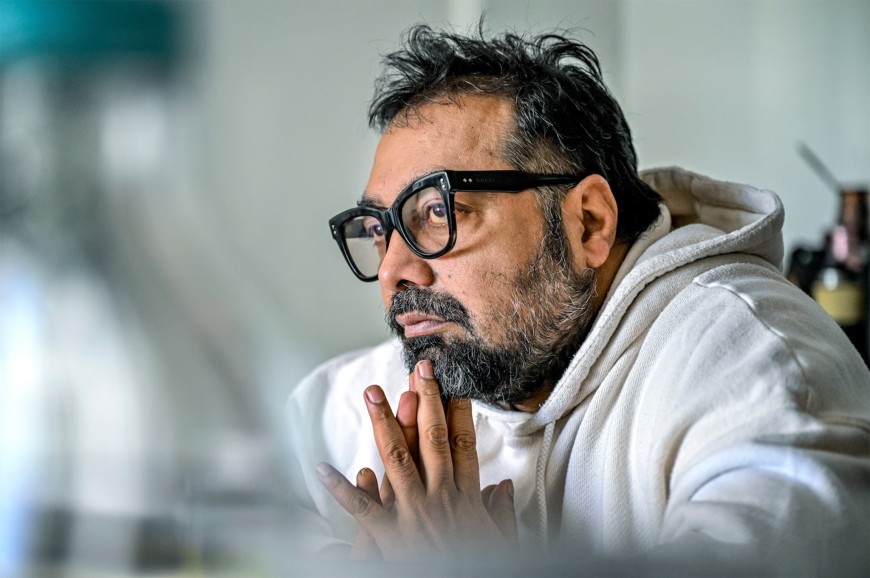
In a career spanning over three decades, Indian filmmaker Anurag Kashyap has been critically observing his homeland through movies about flawed law enforcers, corrupt politicians, and the middle class's duplicity. Acclaimed at international festivals like Cannes and even receiving praise from Martin Scorsese, Kashyap landed significant deals with Netflix when it entered the Indian market in 2016, aiming to create bold, Hindi-language content.
However, by 2021, Kashyap faced a setback when Netflix decided not to proceed with his major project, an adaptation of the book “Maximum City,” which candidly discusses Hindu extremism and the dualities of life in Mumbai.
The foray of Netflix and Amazon Prime Video into India about seven years earlier was meant to revolutionize a key global entertainment market. However, since 2019, a cooling trend has permeated the Indian streaming scene. The Bharatiya Janata Party (BJP) has tightened its control over political narratives, influencing content on these American tech platforms. The party's strategies have included using WhatsApp for propagating its agenda, and strong-arming Twitter to suppress dissent. This political maneuvering has extended to streaming content, where the threat of legal action and public campaigns shape the production decisions of Netflix and Prime Video, leading to widespread self-censorship in the industry. Indian offices of these streaming services, guided by their legal teams, often make significant alterations to content, avoiding subjects that might offend the Hindu right-wing or the BJP. Consequently, projects tackling political, religious, or caste issues are either discreetly rejected at the proposal stage or abandoned during development.
Kashyap recalls Netflix's withdrawal from his “Maximum City” adaptation, terming it as a form of 'invisible censorship.' In a comprehensive investigation involving interviews with over two dozen film professionals in India and the U.S., The Washington Post uncovered numerous instances of such self-censorship, with many sources choosing to remain anonymous to maintain their relationships with Netflix and Prime Video.
The turning point came in 2019 when Hindu nationalist activists began calling for boycotts and filing police complaints against these platforms, accusing them of content derogatory to Hinduism and India. The campaign intensified in January 2021 following the release of “Tandav” by Prime Video, which led to nationwide police investigations over its portrayal of a Hindu deity. This event marked a significant shift in the streaming industry, compelling executives to reassess their project choices.
Post-“Tandav,” Prime Video shelved the satirical series “Gormint” and Netflix withdrew from releasing a documentary about Indira Gandhi's Emergency period, despite an investment of over $1 million. These developments reflected the growing influence of the Hindu right-wing in shaping media narratives, with figures like Sunil Ambekar from the Rashtriya Swayamsevak Sangh asserting that filmmakers should promote a positive image of India.
In early 2021, the Indian government introduced a self-regulation system for streaming companies, ostensibly to control explicit content. However, this move has often been interpreted as a means to enforce political conformity in content. Streaming platforms, aware of the booming market in India, are reluctant to oppose these pressures, with projected revenues in the streaming sector expected to grow significantly.
In response to inquiries about political pressure, Prime Video and Netflix highlighted their commitment to diverse storytelling and creativity, without directly addressing the dropped projects. Kashyap, 51, who once symbolized the indie spirit and early excitement about streaming in India, experienced a personal and professional transformation following his outspoken criticism of the Modi administration during nationwide protests against a citizenship bill. Facing scrutiny and a raid by tax officials, Kashyap found himself increasingly alienated, leading to the shelving of his “Maximum City” project and his struggle with depression.
Despite these challenges, Kashyap remains undeterred. He continues to work on new projects, drawing inspiration from filmmakers in restrictive regimes like Iran and China, and remains hopeful about finding ways to tell his stories under changing circumstances in India.
What's Your Reaction?