


















India’s Defense Crisis: A Big Win for Pakistan

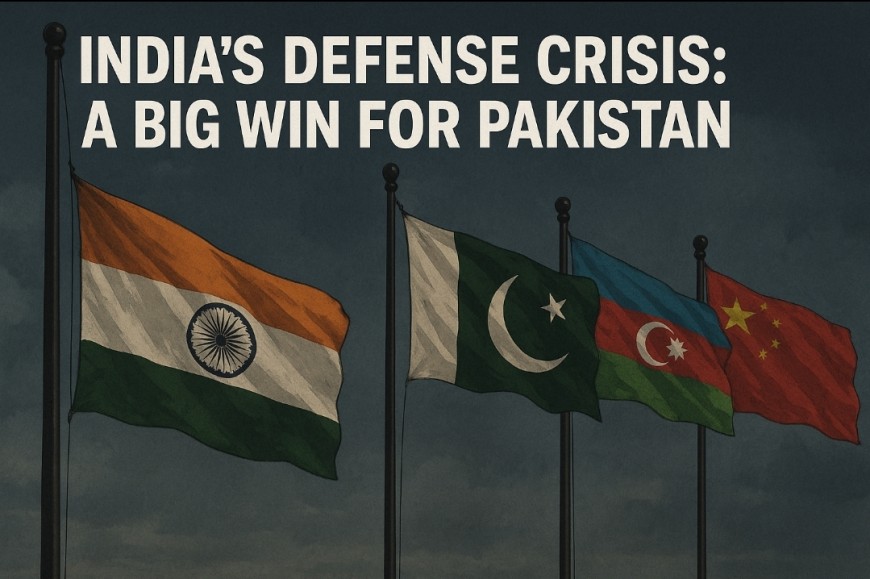
While India sleeps, its strategic world is crumbling. Three major blows have hit India's defense standing in just months. Pakistan closed a massive $4.2 billion fighter jet deal with Azerbaijan. Malaysia rejected India's Tejas fighter for South Korea's FA-50. Bangladesh is now working with China to threaten India's most vulnerable border area.
These aren't separate problems. They show how India's defense diplomacy is failing badly. This isn't just about losing contracts. India's position as a regional power is at stake. Each failure shows deeper mistakes in how India handles its neighbours and defense exports.
The government must act fast. These three developments together create a dangerous situation that could hurt India's security for years to come.
Pakistan's Stunning Defense Export

The numbers are shocking. Pakistan's deal with Azerbaijan started at $1.6 billion but may now reach $4.2 billion. This is Pakistan's biggest defense export deal ever. The JF-17 Block III fighter has advanced radar and long-range missiles that work well.
Azerbaijan sees these jets as a good option while waiting for Turkey's new Kaan fighter, which won't be ready until 2033. President Aliyev even sat in the cockpit and watched the planes fly, showing he's serious about buying them.
Pakistan has changed completely in ten years. It went from needing aid to selling weapons to other countries. The JF-17 fighter now flies in Nigeria and Myanmar. If Azerbaijan buys 40 jets, it will be a huge success.
Pakistan worked with China to build these fighters, and this partnership is beating India's own-made weapons. Through these deals, Pakistan is gaining friends and influence.
This should worry India. Pakistan faces serious money problems but still sells more weapons abroad than India does. Pakistan's joint work with China beats India's go-it-alone approach. When Azerbaijan picks Pakistani jets, it shows other countries are changing how they see both nations. India needs to learn from this loss.
Rejection from Malaysia

February 2023 brought a shocking blow. Malaysia picked South Korea's FA-50 fighter over India's Tejas for a $920 million deal. HAL Chairman R Madhavan had told everyone the talks were "in final stages" and India would win. He was badly wrong. In the final round, it came down to just two fighters - India's Tejas versus Korea's FA-50. India lost.
The reasons hurt to admit. Korea's FA-50 cost several million dollars less per plane than India's Tejas. Malaysia's air force already uses F/A-18 Hornets with the same F404 engine as the FA-50, making maintenance easier. The FA-50 already flies in Indonesia and Thailand, proving it works well in the region. Korea promised to deliver by 2026, while India gave no clear timeline.
India tried to sweeten the deal by offering to service Malaysia's Russian Su-30 jets. It wasn't enough. The Tejas has Israeli parts, which created problems for Muslim-majority Malaysia. South Korea had already built strong ties across the region, while India just made promises.
India's high prices don't work in markets where cost matters most. Countries want proven service networks, not future promises. India must understand each buyer's political concerns, especially about weapon components from countries they don't like.
The Chicken’s Neck Crisis

India's biggest weakness lies in a tiny strip of land just 20 kilometers wide. The Siliguri Corridor connects India's northeastern states to the rest of the country. This narrow passage sits trapped between Nepal, Bangladesh, and Bhutan. China's military positions in Tibet are only 130 kilometers to the north. If enemies block this corridor, 45 million Indians in seven northeastern states would be cut off from the mainland.
In March 2025, Bangladesh's leader Muhammad Yunus went to Beijing and made a shocking statement. He called India's northeastern states "landlocked" and said Bangladesh was their "only ocean guardian." Yunus secured a $2.1 billion Chinese investment package while ignoring India.
He offered China the Teesta River project that was promised to India under the previous government. China is now helping modernize Bangladesh's Mongla Port, giving Beijing a foothold near India's borders.
A retired Bangladeshi general, ALM Fazlur Rahman, posted on Facebook that Bangladesh should team up with China to capture India's northeastern states. He works closely with Yunus's government. While Bangladesh officials later said these weren't official views, their actions tell a different story.
China has been building a "string of pearls": military bases and ports around India. Bangladesh is becoming the final piece. Through Belt and Road projects, China gets economic influence that leads to military access. China uses Bangladesh to pressure India's weakest point without direct confrontation.
India isn't sitting idle. Rafale fighter jets, BrahMos missiles, and S-400 air defense systems now protect the Siliguri Corridor. The elite Trishakti Corps guards the area from Sukna base. India is spending ₹1 lakh crore on new railway lines to reduce the Northeast's isolation. The BIMSTEC partnership offers alternative trade routes.
Government’s Five Point Crisis Response
India must keep constant watch over the Siliguri Corridor with fast response teams ready at all times. The country needs backup supply lines using planes and ships that don't go through the dangerous land route. India's spy networks must dig deep into how Bangladesh and China are working together.
Diplomatic Offensive Required
High-level talks with Bangladesh must start now to counter Yunus's turn toward China. India needs stronger partnerships with Nepal and Bhutan to block Chinese influence. Reaching out to ASEAN countries will prevent more losses like Malaysia's rejection of the Tejas.
Defense Export Revolution
India must learn from Korea's FA-50 success by cutting prices to compete. The country needs to build service centers in target regions before trying to sell weapons. India must remove parts from countries that buyers don't like, especially for Muslim nations.
Strategic Communication
India must fight back against Bangladesh's lies about the Northeast being "landlocked." The world needs to see how China, Pakistan, and Bangladesh are working together against regional peace.
Long-term Vision
Make the Northeast so important for regional trade that no one can afford to cut it off. Build multiple routes so India doesn't depend on just one corridor. Keep Indian weapons better than what China and Pakistan make together.
The Bottom Line:
India faces its biggest strategic challenge since 1962. The government must act now across military, diplomatic, and economic areas.
What's Your Reaction?