


















RESURGENCE OF TALIBAN IN AFGHANISTAN.

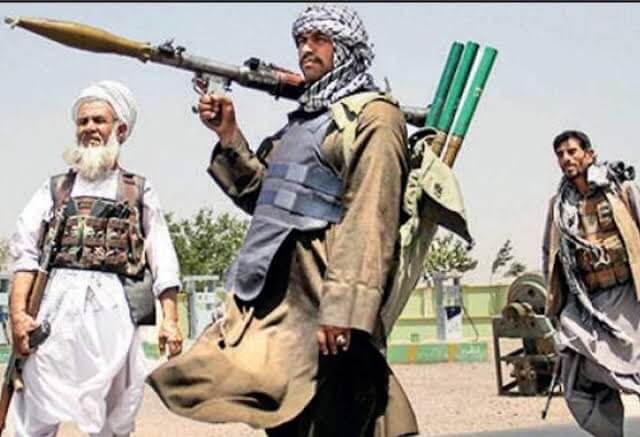
Afghanistan, known as the empire killer is once again in the midst of a violent and deadly civil war between the Afghan Government forces and resurgent Taliban militia, with the later speedily capturing vast swathes of Afghan provinces, and by some estimates might take over Kabul within a month. The Taliban surge comes right on the heels of a hasty US withdrawal which began on the 1st of July, 2021, with a deadline of 31st August, 2021, after 20 years of protracted “war on terror” resulting in the loss of over 1,71,000 lives, trillions of dollars of US debt and with the Taliban once again on the verge of gaining full control of Afghanistan.
After two decades since the US invasion of Afghanistan in their “war against terror”, a fallout of the 9/11 attacks, when the Taliban was ousted from power, the Taliban has reemerged as the likely contender to wrest power from the ruling Afghanistan Government, being installed and maintained by the withdrawing occupying powers. The resurgence and likely victory of the Taliban has upset the regional geo-politics and put questions on regional stability. A stable Afghanistan means stability for the entire region.
The Taliban, or "students" in the Pashto language, emerged in the early 1990s in northern Pakistan following the withdrawal of Soviet troops from Afghanistan. The movement first appeared in religious seminaries/ Madrasas, paid and sponsored by money from Saudi Arabia, which preaches a hardline form of Sunni Islam. The stated aim of the Taliban was to restore peace and security and enforce their own austere version of Sharia, or Islamic law, once in power.
REACTION OF REGIONAL POWERS
The Communist Party of China (CCP) ever the pragmatic mover, did not waste any time in inviting the Taliban leadership to Tianjin city, and on 28th July 2021, China’s Foreign Minster Wang Yi met the Taliban delegation led by Mullah Abdul Ghani Baradar, the political chief of the Afghan Taliban, after which the Chinese Foreign Ministry spokesperson Zhao Lijian told a press briefing that "The Afghan Taliban is a pivotal military and political force and is expected to play an important role in peaceful reconciliation and reconstruction in Afghanistan."
Sharing a 76-kilometre border with Afghanistan, China is naturally worried about any negative impact the change in power will have on Xinjiang's security and stability, which borders Afghanistan, and whether it will also be detrimental to the development of China's “Belt and Road Initiative". Accordingly, Beijing is fast maneuvering to protect its interests as the United States withdraws from its longest war and because of Afghanistan's reputation as "the graveyard of empires" for being notoriously difficult to conquer means Beijing isn't likely to try and bring about regional stability through force.
It appears that China is trying to work productively with whoever is in power, regardless of ideology. Also, the Taliban has remained largely silent on the treatment of Uighur Muslims in China, probably viewing ties with Beijing as a potential source of political legitimacy with economically benefits.
The Turkish President Recep Tayyip Erdogan, whose country is contemplating running and protecting Kabul airport following the withdrawal of U.S. and NATO troops — told CNN-Turk television that he may meet with the Taliban leadership.
In anticipation of US withdrawal from the region Russia has already hosted Afghan Peace conference on March 2021 in Moscow between the various warring factions.
Which leaves India...
THE FUTURE OF INDIAS INVESTMENTS.
Considering India’s massive investments in reconstruction of Afghanistan, which is estimated to be around 3 billion dollars, carried out under the protection of US umbrella, now seems to be in jeopardy and India faces the dilemma whether to wait out the conflict and abandon the Afghan Government or intervene and face the ire of the Taliban who are likely to be in full control before the end of the year.
As per the detailed INDIAN EXPRESS article linked below, India has invested heavily in various projects — dams, roads, trade infrastructure over the last twenty years and in the worst case scenario might end up in a diplomatic wilderness if the opposing Afghan forces are not handled tactfully.
Recently, one of the four attack helicopters donated by India to Afghanistan in 2019 was seized by the Taliban after they took over the airport in Kunduz, in the northeast of the country. Pictures and videos on Twitter show Taliban cadres standing next to a Mi-24 attack helicopter. India had donated four Mi-24V attack helicopters to the Afghan Air Force as well as three Cheetah light utility helicopters, among other equipment in 2019. The attack helicopters were given under a deal between Afghanistan and Belarus, but financed by India. Besides this, India has also provided training to aircrews.
The capture of the Indian helicopter comes as the Taliban and Afghan security forces are locked in a fierce battle for the country and the Afghan security forces are seen as lacking in air support, one of the reasons attributed to the Taliban’s speedy capture of vast territories. Afghan authorities are said to be looking for back up support from countries like India against the backdrop of concerns that the Taliban will escalate the level of violence once international troops complete their withdrawal by 31 August.
THE NEW TALIBAN LEADERSHIP.
The Afghan Taliban under the leadership of Haibatullah Akhundzada seems more sophisticated with regard to handling international powers evidenced by their diplomatic overtures and visits to China and Russia and the establishment of a Diplomatic Office in Doha. Softening of stance on minorities rights and women’s education as per the interview given to the INDIA TODAY NETWORK linked below, where the Taliban spokesperson Mohammad Suhail Shaheen declared that the rights of the minorities will be protected and muslim women will be allowed to study and work outside as long as they wear the Hijab/veil. In the same interview, he also stressed that despite India’s massive efforts towards Afghanistan’s reconstruction, any future talks with India will only be on the “condition of impartiality”.
Considering the strategic importance of Afghanistan for regional stability and security, trade access to Central Asia and the amount already invested by India in building roads, dams, hospitals etc... India will have to tread the waters very carefully.
https://indianexpress.com/article/explained/explained-indias-afghan-investment-7406795/
What's Your Reaction?