



















Plastic eating microbes found in the Arctic could offer solution for the earth's waste management problem.

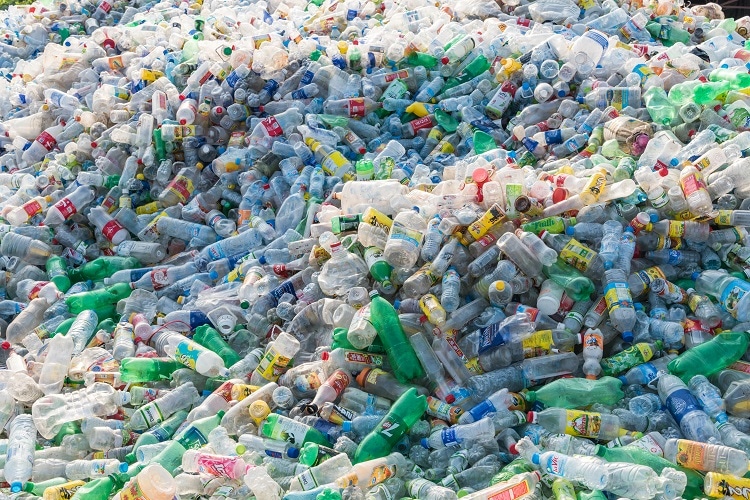
About 400 million tonnes of plastic waste is produced every year. These plastic wastes don’t decompose or degrade over time. But scientists may have found a solution when they discovered some strain microbes in one of the coldest regions of Earth.
Scientists from the Swiss Federal Institute for Forest, Snow and Landscape Research WSL recently discovered microbes in the Arctic and the Alps that ate up certain types of plastic left in their environment.
It is heralded as an astonishing discovery which could be the key to eliminating some forms of plastic waste.
Microorganisms that eat up plastic have been around for quite sometime but the microbes require temperatures of at least 86 degrees Fahrenheit to conduct their feasting. This requirement makes the recycling process inefficient in terms of energy consumption and financial feasibility
But the recently discovered microbes could continue the process of breaking down of plastics even in temperature as low as 59° F or 15 ° C. If these microbes could be used in industrial scale, the process will be much more efficient.
This discovery was made after researchers buried pieces of plastic in Greenland and Alps soil. In the months that followed, they observed bacteria and fungi growing on the plastic. A year after planting the plastic pieces, they took the microbes that were found on it and conducted more tests in controlled settings in a lab to determine just how many types of plastic they could consume.
The study found that 19 out of the 34 strains studied, secreted enzymes that could break down some plastics. However, the only plastic that could be broken down was those that were biodegradable plastics. None of the microbes could break down more traditional plastics i.e. polythene.
The findings were published in The Frontiers in Microbiology on Wednesday.
Even though the discovery holds the key to plastic waste management l, the scientists said that there is still a long way to go before it could be implemented on industrial scale.
"The next big challenge will be to identify the plastic-degrading enzymes produced by the microbes and to optimize the process to obtain large amounts of enzymes," study co-author Beat Frey said. "In addition, further modification of the enzymes might be needed to optimize properties such as their stability."
What's Your Reaction?